Why is my water bill suddenly so high
A water bill that jumps without a change in how you use water usually means water is going somewhere you cannot see. Here is how to find it, step by step.
A high water bill is the most common way a hidden leak is discovered in Cleveland. The house looks fine, nothing is visibly wet, and then the bill arrives much higher than usual. The water is going somewhere, and the job is to find where before it does more damage. This guide works through the checks in order, from the toilet that runs quietly to the slab leak under the floor, and explains the meter test you can do yourself in fifteen minutes.
Start with the toilets
Before anything else, check every toilet. A toilet that runs constantly is the most common cause of a sudden bill increase, and it is also the easiest to find. Lift the tank lid on each toilet and listen: a faint hiss or a fill valve that cycles on its own means water is leaking from the tank into the bowl. Run the dye test: a few drops of food colouring in the tank, ten minutes without flushing, and colour in the bowl means the flapper or the flush valve seat is leaking. Check the fill valve level too: if the water sits above the overflow tube, water runs down the tube constantly. Our guide to a toilet that runs constantly covers the full diagnosis, and our toilet repair and installation team can fix it.
The meter creep test
The meter test is the fastest way to prove a leak exists. Turn off every tap, every appliance, and the ice maker, and make sure no toilet is running. Go to the water meter, usually in a box in the ground near the street, and watch the dial or the leak indicator for fifteen minutes. If the meter moves with everything off, water is leaving the house somewhere it should not. Note the reading, wait, and read it again: movement confirms a leak, and the rate of movement gives a rough sense of its size. If the meter does not move, the high bill is more likely a usage change, a misread, or an estimated read on the bill itself: check the bill for a note about how the reading was taken, and compare the usage against the same period last year before assuming a leak.
A slab leak is the prime suspect
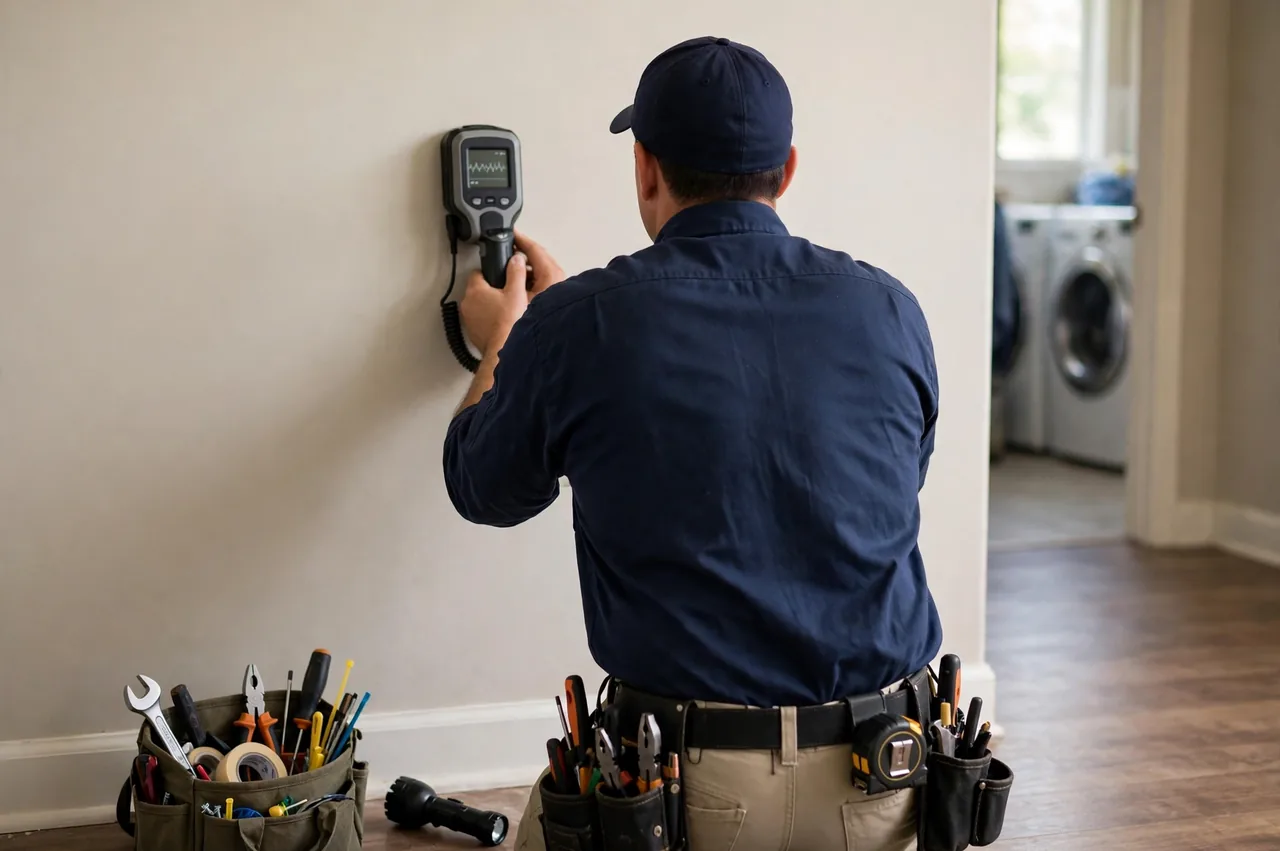
If the meter moves and no fixture is running, a slab leak is the prime suspect in Cleveland. Most homes here are built slab-on-grade, and the water lines run under the concrete floor. The expansive gumbo clay under much of the area moves with wet and dry seasons, stressing rigid pipes beneath the slab. A slab leak often shows itself in small ways first: a warm spot on the floor, the sound of running water when nothing is on, a drop in hot water pressure, or a damp patch at the base of a wall. A high water bill is frequently how a slab leak is discovered, because the leak is out of sight. This is a leak detection job, not a do-it-yourself one: finding the leak means listening equipment and pressure testing, not digging up the floor on a guess. Our leak detection team traces hidden leaks, and our slab leak repair page explains how a confirmed slab leak is fixed. Homeowners in Pinewood Trails and other newer slab-on-grade communities should know that even a new slab home can develop a leak, and the bill is often the first sign.
Outdoor and irrigation leaks
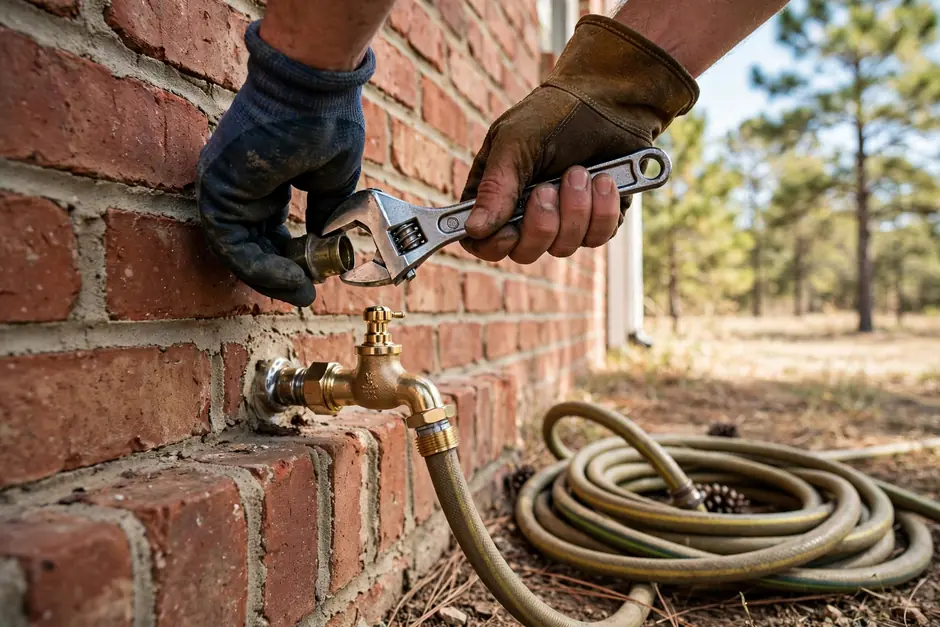
Do not forget the outside of the house. An irrigation system with a cracked head or a split line can run hundreds of gallons into the lawn without any sign inside, and a hose left running or a hose bibb that drips after a freeze does the same. Walk the yard and look for a patch of grass that is greener or softer than the rest, or a spot that stays wet when the rest of the yard is dry. Check the irrigation controller: a programme that changed after a power cut, or a zone stuck on, can explain a bill jump on its own. Check the water heater too: a tank leaking from the bottom can run water down a drain unnoticed, and our guide to a water heater leaking from the bottom covers the signs.
What to do with the findings
If the meter moves and you cannot find the cause, call a plumber and describe the meter test and what you have already checked. If the bill looks wrong rather than the plumbing, call the water provider and ask how the reading was taken and whether the meter has been read or estimated. Keep the bill and note the meter readings you took, because both help the plumber and the provider. Do not ignore a high bill and hope the next one is lower: a leak that is wasting water is also doing damage somewhere, and the damage grows while the bill does. If the leak is under the slab, early detection is the difference between a targeted repair and a much larger job.
Frequently Asked Questions
Why is my water bill suddenly so high?
Usually a running toilet, a hidden leak, or a slab leak. Check the toilets first, then run the meter creep test with everything off. If the meter moves, water is leaving the house somewhere it should not.
How do I test for a leak with my water meter?
Turn off every tap and appliance and make sure no toilet is running. Watch the meter dial or leak indicator for fifteen minutes. If it moves with everything off, you have a leak.
What is a slab leak, and how do I know I have one?
A slab leak is a leak in a water line under the concrete floor. Signs are a warm spot on the floor, the sound of running water when nothing is on, low hot water pressure, and a high water bill. It needs leak detection equipment to find.
Can a running toilet really raise my water bill that much?
Yes. A toilet that runs constantly wastes a large amount of water over days and weeks, and the increase shows up on the next bill. Check every toilet first.
Should I call the water provider or a plumber first?
Call a plumber if the meter moves with everything off, because that proves a leak on your side. Call the water provider if the bill looks like a misread or an estimated read rather than a real usage jump.
Get help with plumbing in Cleveland
If your water bill in Cleveland has jumped and the meter moves with everything off, call Precision Plumbing LLC at (346) 687-0011 during business hours, Monday through Saturday, 7:00 AM to 5:30 PM. We trace hidden leaks and fix them, and test the line before we leave.